How does it work?
The purpose of ecolabelling is to help consumers make good choices for the environment. It is urgent to change our consumption and lifestyle if we are to achieve the UN’s global goals for sustainable development. The Nordic Swan Ecolabel works towards several of the 17 sustainability goals such as biodiversity, clean water and a non-toxic environment. Of course, goal number 12 on sustainable production and consumption is our highest priority.
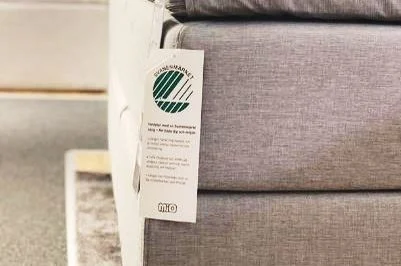
The Nordic Swan Ecolabel is a Type 1 ecolabel (ISO 14024). This is one of the world’s most credible and tough environmental labels. Type 1 means that the products meet environmental requirements set by an independent third party, that the requirements are continually tightened, and that they are developed from a life-cycle perspective.
After more than 35 years in the service of the environment, a majority of the Swedes recognise the Nordic Swan Ecolabel and more than two thirds trust that Nordic Swan Ecolabelled goods and services are a better choice for the environment.
Who’s behind the Nordic Swan Ecolabel?
The Nordic countries have agreed on an official ecolabel, the Nordic Swan Ecolabel. In Sweden it is the state-owned company Ecolabelling Sweden that is responsible for the Nordic Swan Ecolabel. Ecolabelling Sweden works on behalf of the government and without industry or profit interests. We are also responsible for the EU Ecolabel, which is the EU’s common ecolabel.
All information submitted in connection with a licence application is treated confidentially. This applies both to information directly from the applicant and from subcontractors.
What can be ecolabelled?
We only set requirements for products and services where they would have a great potential to reduce environmental impact. It is usually products that are used in large quantities and by many people.
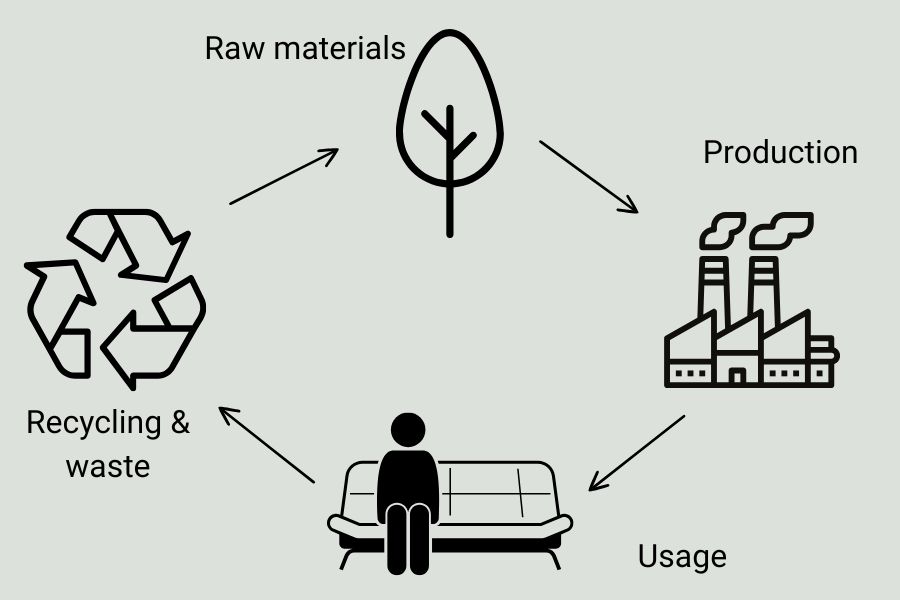
By performing a life cycle analysis of products, our requirements become effective.
To obtain effective requirements that are useful and do not push environmental problems from one area to another, we analyse the life cycle of products and services. We look at content and use of for example chemicals, raw materials, how they are produced/used (water and energy consumption, emissions to air, water and soil) and how the product is handled when it is consumed (recycling and waste).