
Tips for marketing without misleading
Does your company have a more environmentally friendly product that you want to communicate about? Here’s how to promote it without violating Empowering Consumers, being accused of greenwashing, or misleading. The rule of thumb is: be precise – and have proof!
Many consumers want to shop more environmentally friendly. Therefore, many manufacturers of goods and services want to engage in “green marketing”, i.e. show customers why their product is a better choice for the environment than others. How to achieve that without falling into the greenwashing trap?
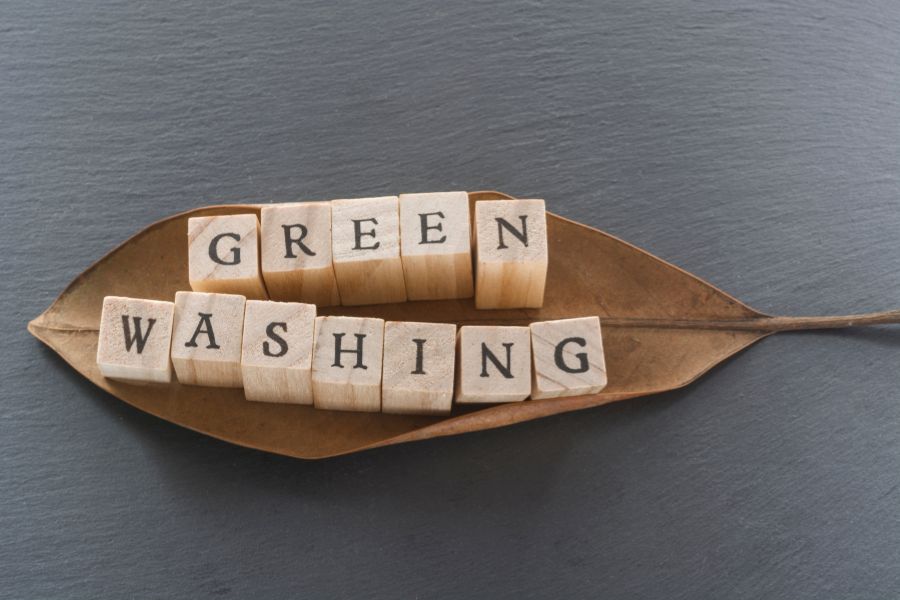
What is greenwashing?
Greenwashing is when the product is presented as more sustainable than it really is, for example by using vague, exaggerated or incorrect claims about the product. Greenwashing is misleading marketing.
Misinformation makes it difficult for consumers to make conscious and good choices, which can make it difficult for manufacturers who have actually reduced their environmental impact to get the message across.
Greenwashing irritates consumers
Greenwashing is widespread and frustrates consumers. When European consumer regulators investigated websites in 2021, they found that 42 percent of them contained greenwashing. As many as 68 percent of Swedish consumers are annoyed that products are marketed as “green” without any good explanation. 8 out of 10 Swedes believe that companies often exaggerate how environmentally friendly their products are. This is shown by the Nordic Swan Ecolabel’s consumer survey, conducted by Opinion 2025.
No company wants to annoy potential customers. Here’s how to talk about your product without misleading
Be precise and specific
Don’t use vague wording about how environmentally friendly your product is. All production burdens nature, leads to greenhouse gas emissions and contributes to pollution. Therefore, no product is environmentally friendly or 100 percent sustainable. Instead, be specific about what are good (and relevant) environmental properties of your product. For example: “Made with 30 percent less water” or “Contains no antibacterial chemicals”. Be precise in your wording!
You must be able to document what you say
If you say that the product is produced with 30 percent less water, you must be able to document both what you are comparing with, and that 30 percent less water has actually been used in the manufacture of this product. Have proof of what you claim!
What you say must be relevant
The environmental claims you make must have an impact on the product itself. If you are going to market an office chair as a good environmental choice, it is not enough that the shipping is done by electric vehicle or that you do not send out paper invoices.
You have to relate to the rest of the market
If you say that your product is more environmentally friendly than your competitor’s, you need to be able to document this. It is also not allowed to highlight something as a positive feature of your product, if laws and regulations require this of all products.
Be careful with the use of images and colors
Images, symbols and colours can give the impression that the product is more environmentally friendly than you have evidence of. A green leaf or globe on the packaging can lead to your advertising being considered greenwashing. Remember point 1: Be specific. If necessary, use visual means to substantiate, for example, your claim that you have used 30 percent less water in production.
Don’t play on fear or a guilty conscience
Do not take advantage of the fact that some consumers are worried about the climate and the environment, or that they lack knowledge in the area. No one saves the whole world by buying your product. But it is good to choose an alternative that, for example, requires 30 percent less water in production. Again: Be specific about what’s good and tell the customer about it.
Use credible labelling systems
Consumers have low confidence in the manufacturers’ own environmental claims, but significantly higher confidence in independent labelling systems, such as the Nordic Swan Ecolabel or similar. The Swedish Consumer Agency also recommends the use of independent labelling systems as far as possible.
80 percent trust that a product is a good choice for the environment when it is Nordic Swan Ecolabelled.
42 percent trust that a product is a good choice for the environment when it is marketed as environmentally friendly or sustainable.
68 percent are often annoyed that products are marketed as “green” without a good explanation.